

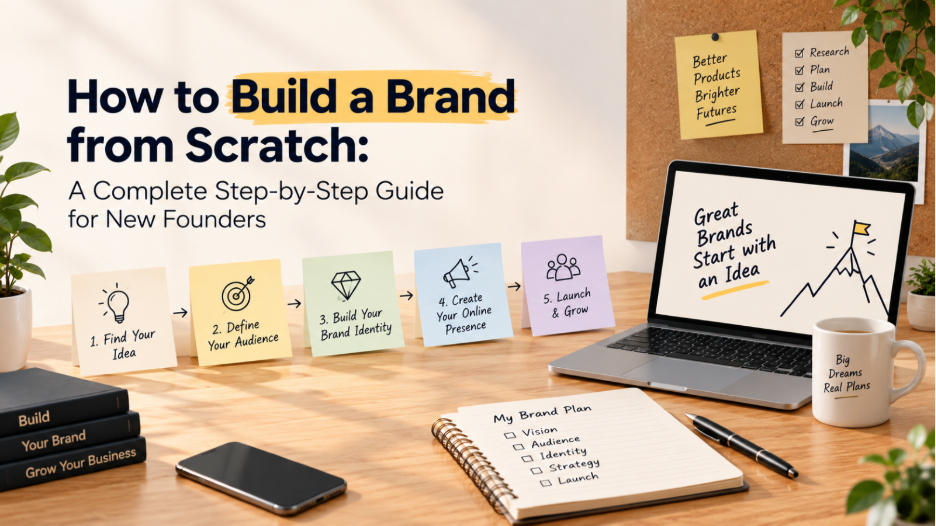
Every founder we talk to starts with some version of the same question: Where do I even begin? You do not begin with a logo, and you do not begin with a name either. You begin by deciding who you are building for and what you want them to believe about you before they have ever tried your product.
That is the idea behind building a brand from scratch: a sequence of decisions, strategy first, identity second, product third, and presence fourth, that turns an idea into something people know and trust. A brand is not a logo project. It is a business decision that runs through naming, product, packaging, compliance, and marketing at once.
If you are building a perfume, cosmetics, Ayurveda, or nutraceutical product brand, this guide explains the order that helps you move from idea to shelf without expensive backtracking.
LaunchVeda helps founders connect product development, manufacturing, product packaging, compliance, branding, e-commerce and business growth through a structured product launch roadmap.
What Building a Brand from Scratch Actually Means
A brand is the sum of what people believe about your business before, during, and after they buy from you. Building one means making four connected decisions.
- Strategy: Who you are for, what you stand for, and why you exist beyond making money.
- Identity: Your name, logo, colors, packaging, and the way you talk.
- Product: What you are selling and whether it can be made, certified, and delivered at the quality you promise.
- Presence: Where people find you, buy from you, and hear from you again.
Why Most New Brands Never Make It to Launch Day
The same patterns repeatedly derail first-time launches: unclear target customers, logo-first thinking, product decisions made after branding, compliance treated as a last-minute surprise, and no growth plan beyond launch day.
In cosmetics, Ayurveda, and nutraceuticals, requirements involving FSSAI, BIS, and AYUSH can affect the product, label, and claims. Getting the sequence right from day one prevents expensive rework.
Step 1: Get Honest About Your Brand Foundation
Write down real answers to four questions: What problem does your product solve, and for whom? What should people feel when they think of your brand? Who are your closest competitors and what are they not doing well? If your brand were a person at a dinner party, how would it speak?
This brand foundation becomes the filter for every later decision, from the name and packaging to the tone of your social captions.
Step 2: Research Your Market
Study five to ten competitor brands, including their pricing, packaging, and customer reviews. Reviews show what customers value and what frustrates them in their own words.
Look beyond age and gender. Buying occasions, price sensitivity, and where customers shop often matter more for product brands. Find an underserved gap in ingredients, price, packaging, or honest claims. For Ayurveda and nutraceuticals, check which claims you can legally make because that will shape your messaging.
Step 3: Choose a Name That Can Carry the Weight
A strong name needs to be memorable, legally registrable, and available as a domain and social handle. Brainstorm 20 to 30 names around your positioning, check trademark availability early, and confirm digital availability before getting attached.
Say the name aloud to people who have never heard it. If they mishear or misspell it on the first try, word-of-mouth and search visibility may suffer for years.
Step 4: Build a Recognizable Visual Identity
Your logo, color palette, typography, and packaging should follow from positioning. Keep the logo usable on a product label, social icon, and signboard. Choose two or three primary colors, one headline font, and one body font.
Packaging is your brand's first physical handshake. It must work in retail lighting, product photography, and beside competitors on a shelf. Capture the system in a one-page brand style guide so future designers, vendors, and marketplace listings stay consistent.
Step 5: Find Your Brand Voice
Choose three to five words that describe your tone, write a short tagline that captures your promise, and define the three messaging pillars you want to be known for.
A consistent voice across Instagram, your website, product descriptions, and customer support builds trust faster than a brand that sounds like a different company on every channel.
Step 6: Make the Product Real
Branding means little if the product cannot be formulated, manufactured at scale, and legally sold. Finalize formulation or fragrance direction with a capable category partner, run real samples, and collect honest feedback before committing to production.
Confirm that the manufacturer can scale from a pilot batch to reorder volumes without quality drifting. A strong first batch is not enough if the fifth batch tastes or smells different.
Step 7: Solve Packaging and Compliance Together
Packaging and compliance should be handled in parallel. Design around the approved formulation's shelf life, storage needs, and labeling requirements. Confirm ingredient lists, net quantity, manufacturer details, licensing numbers, and permitted claims.
Secure category-specific approvals before launch: FSSAI for nutraceuticals and consumables, BIS and Cosmetic Rules compliance for cosmetics, and AYUSH licensing for Ayurvedic products. Getting this sequence wrong is a common reason launches slip by months.
Step 8: Build Where Customers Will Find You
Build a fast, mobile-first website that reflects the brand, marketplace listings on platforms such as Amazon, Flipkart, or Nykaa, and properly branded social profiles before the first public post.
Every channel should use the same voice, imagery, product information, and positioning so the customer experience feels connected.
Step 9: Plan the Launch
Choose a launch date and build a short content calendar with teasers, behind-the-scenes content, and an honest founder story. Plan the first promotion through influencer seeding, a launch offer, or founding customers built before launch.
Prepare customer support and fulfillment before traffic arrives, not after the first orders are waiting in an unanswered inbox.
Step 10: Plan for After Launch Day
The brands that last treat launch as a starting line. Set up performance marketing across Meta, Google, and marketplaces with real budgets and measurable metrics.
Use AI-driven tools for content, personalization, and campaign optimization, and build repeat-purchase loops through email, WhatsApp, loyalty offers, and a consistent brand voice.
The Mistakes Founders Make Most Often
- Designing a logo before agreeing on positioning.
- Choosing a name without checking trademark or domain availability.
- Finalizing packaging before formulation and compliance are approved.
- Treating regulatory licensing as a last step instead of running it in parallel.
- Launching without a plan for the weeks and months after launch day.
How LaunchVeda Fits into the Journey
LaunchVeda works as an end-to-end launch partner for founders building Perfume, Cosmetics and Skincare, Modern Ayurveda, and Nutraceutical brands.
The goal is to move from an idea in a note app to a real, market-ready brand with one connected team across the journey.
- Brand strategy and naming built together instead of separately.
- Product formulation and manufacturing support from concept to a scalable batch.
- Packaging and labeling designed around compliance requirements from day one.
- Legal and compliance guidance covering FSSAI, BIS, and AYUSH requirements.
- Website development and marketplace launch readiness before the product ships.
- Growth marketing, including AI-powered tools, to keep the brand moving after launch.
Frequently Asked Questions
How long does it take to build a brand from scratch?
For a product-based brand such as perfume, cosmetics, Ayurveda, or nutraceuticals, a realistic timeline is 8 to 16 weeks from finalized positioning to market launch, depending on formulation complexity and category approvals. With LaunchVeda, the complete process can take 45 to 90 days depending on scope and readiness.
What is the first step in building a brand from scratch?
Define your brand foundation: your target customer, positioning, and what you want the brand to stand for before naming, logo, or product decisions are made.
How much does it cost to build a brand from scratch in India?
Costs vary by category and scale. Typical line items include brand strategy and naming, identity and packaging, formulation and manufacturing, compliance licensing, and initial marketing. An end-to-end partner can reduce rework and disconnected vendor costs.
Do I need a manufacturer before I finalize my branding?
Not before defining your strategy, but formulation and manufacturing should be considered early, ideally before packaging is finalized, because compliance requirements, shelf life, and approved claims can affect the label design.
What licenses do I need to launch a cosmetic, Ayurveda, or nutraceutical brand in India?
Cosmetics generally need to comply with the Cosmetic Rules and BIS standards, Ayurvedic products need AYUSH licensing, and nutraceuticals need FSSAI licensing. Exact requirements depend on the category, claims, and manufacturing setup.
Can I build a brand from scratch without a design or marketing background?
Yes. Most founders do not have a design or marketing background. The most important input is clarity about who you are building for and what problem you solve; specialist partners can handle the execution.
Ready to turn your idea into a real, market-ready brand? Start your launch plan with LaunchVeda.